Posts tonen met het label geschiedenis. Alle posts tonen

woensdag 15 februari 2017

Voortgezet onderwijs kan gevaarlijk zijn

'Ode aan Socrates' in opdracht van deBuren
gisteravond voorgedragen bij de discussiereeks Made in Europe, deBuren, Brussel
eerder (deels) te horen op Radio 1 Canvas


Raphaël, Heidag van Gymnasiumdirecteuren (1509-11, Vaticaan, Rome)
 
Voortgezet onderwijs kan gevaarlijk zijn, zowel voor wie het geven als voor wie het ontvangen. Dat is één les die we kunnen leren van de uitvinders ervan. Want de filosofen op Raphaël’s School van Athene, als je erover nadenkt, zijn eigenlijk dat: de eerste middelbare-schooldirecteuren. Voordat er sofisten op de agora en bij het gymnasion opdoken om lessen welsprekendheid te geven, was het lesprogramma voor gegoede Atheense telgen vrij overzichtelijk: gymnastike en mousike. Lezen en schrijven. Homerus stampen. Lier spelen. Heel veel atletiek als voorbereiding op de latere permanente dienstplicht. Meezingen in het koor op een festival ter meerdere eer van de stadstaat.

De leerlingen van Socrates, daarentegen, gaan rare dingen doen. Plato steekt de manuscripten van zijn eigen toneelstukken in de fik. Alcibiades, de latere staatsman annex landverrader, komt in het Symposion stomdronken partycrashen om een ode op Socrates af te steken. Een ode die meer klinkt als een klaagzang: Socrates is ontzettend lelijk, hij drijft overal de spot mee, en hij is niet te versieren, wat je ook probeert – maar dat brein van hem, daar word je wild van. Critias, ook een leerling van Socrates, begint een Robespierre-achtig schrikbewind waarin 1500 Atheners het leven laten. 

woensdag 15 juni 2016

Was there ever not a crisis in the humanities?

Essay that won the second prize in the Shout out for the Humanities competition, organized by advocacy group 4humanities.org. Personally, I consider the Humanities as an explanandum rather than something to shout out for, but it still makes sense to explain why we're in this game.

Image: Bernard Picart, The Muses warming themselves by the fire of bad books


Rumours have it that there is a crisis in the Humanities. That news is not new. According to one tract, there are four reasons for it:
  • The classics are edited badly.
  • Scholars promise too much, and then cannot live up to the expectations.
  •  Scholars quarrel too much, and thereby give the Humanities a bad name.
  • There is no money in it.
That is what theologist and journalist Jean le Clerc, one of the most prominent voices in the Republic of Letters of his day, wrote in 1699 in the first volume of his Parrhesiana. Especially point 4 still rings familiar.

The most recent episode in that crisis seems to have taken place last year, as a wave of student protests washed over Canada, the Netherlands and the UK opposing budget cuts, college fee rises and staff and student disempowerment especially in the non-STEM disciplines. No one complained about bad editions of the classics, but everyone involved seemed to agree that the university was not living up to its promises and instead leaving staff and students in the cold. One widely shared article compared academia to a Ponzi scheme, since it asks students to bury themselves in debt with the promise of jobs that they will rarely get, and if so only after years in graduate and post-doc limbo. If devoting your life to learning becomes like borrowing money from the mob, then something has gone gravely wrong indeed.

maandag 13 juni 2016

Er kleeft geen boekenstof aan

Louis Andriessen / DNO / Asko|Schönberg / The Quay Brothers: Theatre of the World
Gezien: 11 mei in Carré
Vandaag in Theaterkrant


The Last Man who Knew Everything, is de titel van een bundel over Athanasius Kircher (1602-1680). Die titel is ironisch: Kircher was vooral iemand die dacht alles te weten, die de ‘Egyptische wijsheden’ op alle obelisken in Rome vertaalde, speculeerde over de onderaardse wereld en over reizen langs de planeten, een wonderkamer vulde met naturalia en antiquaria, een ‘componeermachine’ ontwierp en kikkers weer tot leven probeerde te wekken.

Maar een knooppunt van kennis was hij zeker: in het Collegio Romano zat hij in het centrum van het wereldwijde Jezuïtische correspondentienetwerk, en met steun van de Paus liet hij zijn toch mild ketterse, prachtig geïllustreerde werken verschijnen in Amsterdam. In later eeuwen werd Kircher een curiosum voor bibliofielen en wetenschapshistorici; rond de eeuwwisseling is hij, mede door toedoen van Umberto Eco en een drietal tentoonstellingen, uitgegroeid tot een cultfiguur.

De nieuwe opera van Louis Andriessen, Theatre of the World, is dan ook niet de eerste artistieke adaptatie van het leven en werk van Vader Athanasius. Wel is het, als vlaggenschip-productie van DNO en het Holland Festival, beslist de grootste tot nu toe. De gebroeders Quay, die twee jaar geleden een fenomenale tentoonstelling in EYE hadden van hun lugubere marionettenspelen en stop-motion-animaties, ontwierpen het decor. Louis Andriessen is niet alleen de enige levende Nederlandse componist die school gemaakt heeft, hij heeft ook een reputatie voor pittige onderwerpen, zoals Che Guevara (Reconstructie), seks met paarden (Rosa, a horse drama) en seks met je vader (Anaïs Nin). Alle ingrediënten aanwezig, kortom, voor een geest- en zinnenprikkelend totaalkunstwerk.

En toen kon het natuurlijk alleen maar tegenvallen.

zondag 29 november 2015

Paper Machines

The Systems, Maps, Chronometers, and Apparatuses of Johann Christoph Gatterer
Deze week op Shells and Pebbles

Johann Christoph Gatterer was a data gatherer. As a professor of history in Göttingen, from 1759 until his death forty years later, he compiled collections of medieval manuscripts, coins, heraldic tables, maps, and even weather reports. He did not only collect them: he also transformed his hoard into manuals for studying heraldry and medieval charters, drew up elaborate multicoloured charts and diagrams, and made highly acclaimed historical maps. He claimed that he arranged his data as strictly as Linnaeus had ordered the world of plants and animals. On top of that, he wrote some seven outlines of Universal History, that is, chronologies from Creation to the present. Although he had a rival in his colleague Schlözer, who collected more politically relevant contemporary data, and although he never wrote a compendium as large as the Benedictine Nouveau Traité de Diplomatique, he was arguably the biggest historical data collector of his time.

Much of that data collection was directly related to his teaching. The Gatterer-Apparat of medieval charters and transcripts was used to teach his students how to read and distinguish different types of medieval writing (‘diplomatics’), and the Apparat even expanded through their copying exercises. His historical maps were only available for his students, assuring him a double income from fees and sales, with the unfortunate side-effect that most maps are now lost. Fifty years before Ranke, he set up a historical seminar and even founded a Historical Institute, complete with its own largely one-man journal for reviews and miscellanea. In short, he did more than anyone else in the 18th century to turn history into a science.

donderdag 12 november 2015

A short history of scholars who died over their multivolume projects

Additions are welcome. I have restricted myself to the period 1750-1900.


Charles-François Toustain (+1754), over the 3rd volume of Nouveau Traité de Diplomatique (6 vols., 1750-65), an extended version of Mabillon’s De Re Diplomatica (1681). Finished by René-Prosper Tassin.

Charles-Marie Févret de Fontette (+1772), over the 4th volume of Bibliothèque historique de la France (5 vols., 1768-78), an extended version of Le Long’s compendium of the same title (1719). Finished by J.L. Barbeau de la Bruyère.

Antoine Court de Gébelin (+1784), over the 10th volume of Monde Primitif analysé et comparé avec le Monde Moderne (9 vols., 1773-82). Left unfinished.

Johann Christoph Adelung (+1806), over the 2nd volume of Mithridates oder Allgemeine Sprachenkunde (4 vols., 1806-17), a compendium of all known languages. Finished by J.S. Vater and Friedrich von Adelung, his nephew.

Wilhelm Gottlieb Tennemann (+1819), over the 11th volume of Geschichte der Philosophie (1801-19). Left unfinished.

Jean-François Champollion (+1832), over Grammaire égyptienne (1836) and Monuments de l’Egypte et de la Nubie (4 vols., 1835-45). Both finished by his brother.

Joseph-Marie de Gérando (+1842), over the revised version of Histoire comparée des systèmes de philosophie (7 vols., 1822-47). Last three volumes published by his son.

Jacob Grimm (+1863) and Wilhelm Grimm (+1859), over the Deutsches Wörterbuch (32 vols., 1854-1961). Wilhelm died over the letter D, Jacob over E.

Jules Michelet (+1874), over the 3rd volume of Histoire du XIXe Siècle (3 vols., 1875), a complement to his Histoire de France and Histoire de la Révolution Française. Left unfinished.

Jacob Burckhardt (+1897), over Griechische Kulturgeschichte (4 vols., 1898-1902). At the time of Burckhardt’s death there was a finished manuscript, but his will stated that it should be destroyed.

dinsdag 28 april 2015

Het trieste einde van Antoine Court de Gébelin

Vandaag op Shells&Pebbles


Antoine Court de Gébelin, koninklijk censor en geleerde sensatie van het late Ancien Régime, stierf in verdachte omstandigheden in Parijs op 12 mei 1784. In zijn laatste jaar had hij zich laten behandelen door de Weense wonderdokter Mesmer, en was uiteindelijk zelfs bij hem ingetrokken. Een mesmeristische behandeling houdt in dat het ‘dierlijk magnetisme’ van de patiënt gestimuleerd wordt met magneten en statische elektriciteit, soms in groepsséances rond een ‘mesmeristisch bad’. Op het moment van Gébelins dood stond het mesmerisme al ter discussie. In de voorafgaande maanden had Louis XVI twee commissies van de Académie des Sciences en de medische faculteit aangesteld om het dierlijk magnetisme te onderzoeken: op zichzelf een markant moment in de medische geschiedenis. De dood van zijn belangrijkste pleitbezorger kwam Mesmer dus erg slecht uit. Wat er gebeurd is, blijft onduidelijk.


Martelaar van Mesmer

Een mesmeristisch bad is een afgesloten vat met ‘gemagnetiseerd’ water waar metalen handvatten uit steken. Ook in 1784 deed de combinatie ‘bad’, ‘elektriciteit’ en ‘plotselinge dood’ al wenkbrauwen fronsen; er verschenen dan ook spotliedjes over Gébelin als ‘martelaar van het magnetisme’. Op de Engelse wikipedia-pagina staat zelfs dat Gébelin dood in bad lag, ‘apparently of an electrically induced heart attack’. Toen eerst het rapport van de Académie des Sciences (waar o.a. Lavoisier, Benjamin Franklin en dokter Guillotin aan meewerkten) en daarna dat van de medische faculteit concludeerden dat het ‘dierlijk magnetisme’ puur op suggestie berustte,[1] werd Mesmer de grond te heet onder zijn voeten. In 1785 verliet hij Parijs en verdween in de obscuriteit.

maandag 6 april 2015

Zes tekenlessen en een hedendaags klooster

Gisteren in hard//hoofd, in het kader van de manifestatie Memory Machine


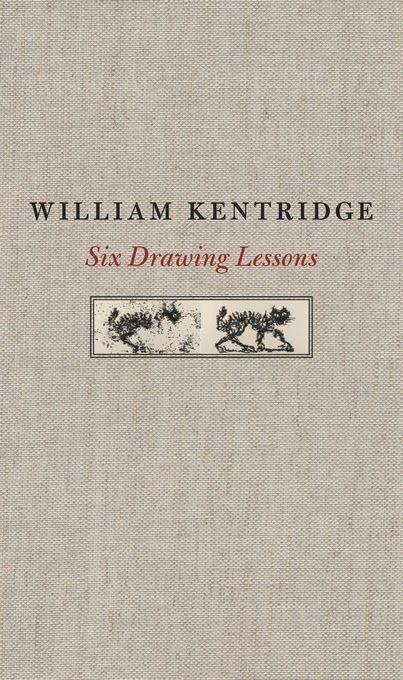
Ik lees in de U-Bahn. Er is weinig anders te doen. Het is een kwartier naar het Haus der Festspiele, een half uur naar Potsdammer Platz, drie kwartier naar Hamburger Bahnhof. Meestal lees ik, zoals gebruikelijk, vakliteratuur. Maar de eerste dagen in Berlijn las ik Six Drawing Lessons van William Kentridge; het zijn de lezingen die Kentridge gaf in Harvard terwijl hij bezig was met de multimediale installatie The Refusal of Time.

In Six Drawing Lessons probeert Kentridge, in woord en beeld, zich rekenschap te geven van hoe hij als kunstenaar met het beladen Zuid-Afrikaanse verleden omgaat. Hij vraagt zich aan het begin af wat hij als kunstenaar eigenlijk over geschiedenis te melden heeft, en zijn antwoord zit ergens verscholen in een passage die ik niet terug kan vinden: recht doen aan de kakafonie van de ervaring. Historische verbanden en associaties waaieren alle kanten op, en The Refusal of Time vangt dat in een indrukwekkende maalstroom van beelden. Het was de eerste keer dat ik als historicus jaloers was op een kunstenaar.

Meestal heb ik mijn schetsblok bij me. Dat is mijn manier om beter te kijken. Lang vertelde ik mezelf dat ik in vreemde steden moest kijken alsof ik het allemaal moest onthouden; tegenwoordig teken ik het na. Al zolang als ik me kan herinneren heb ik een preoccupatie met ‘schuldig landschap’: plekken die door de geschiedenis besmet zijn. Wat dat betreft zit ik goed in Berlijn. De stad is een monument voor zijn verdwenen zelf. Midden in het centrum zijn grote kale plekken, alsof het een kwart eeuw na de val van de muur nog altijd niemandsland is.

dinsdag 17 maart 2015

Bildung heute?

Vandaag in hard//hoofd


“Ik herinner me nog het moment dat ik vaststelde dat ik unpolitisch was geworden”, schreef ik een maand geleden, terugkijkend op mijn jaren in het studentenprotest en de artistieke ondergrondse. Alsof het zo bedoeld was verscheen een dag later een satirisch verhaal over een Burgerlul die wegloopt om zich in het Woeste, Grensverleggende Amsterdam te voegen bij de intelligentsia in de contramine, of de avant-garde, zulk spul. Het was geschreven door iemand die tien jaar jonger was dan ik. 

En nog dezelfde week werd het Bungehuis bezet, wat na ontruiming omsloeg in een nog altijd voortdurende ‘re-appropriation’ van het Maagdenhuis. “Ik moet nodig eens repolitiseren”, schreef ik aan een bevriende politiek filosoof. Maar daar was geen tijd voor. Terwijl het protest oversloeg van de studenten naar de docenten, was ik mijn koffers aan het pakken. En nu zit ik in een hypermodern klooster-achtig instituut in een Berlijnse villawijk onderzoek te doen naar onderwijshervormingen van twee eeuwen geleden.

Nog voordat het Bungehuis bezet werd, vroeg iemand me of er op dit moment met de crisis aan de UvA ook sprake was van een revolutie in de geesteswetenschappen. Ik vond dat een rare vraag. Profiel 2016, het ondertussen feitelijk afgedankte bezuinigings-plus-hervormingsplan van letterendecaan Frank van Vree, was meer een kopie van een Angelsaksisch model dan een baanbrekend nieuw idee. Allengs lijken de ontwikkelingen in Amsterdam al meer op een kleine revolutie. Maar het Maagdenhuis is geen Bastille. (De Bastille was trouwens, toen die bestormd werd, grotendeels leeg: er zaten nog twee gekken, een paar valsemunters en een vriend van Marquis de Sade.)

maandag 9 februari 2015

Conceptual Change in the History of the Humanities (des weiteren)

Published today in Studium Tijdschrift voor Wetenschaps- en Universiteitsgeschiedenis 7:4 (2014)


'Conceptual Change in the History of the Humanities' is an article with a history. I started it in early 2011 in the hope of getting a PhD position if I could get something published. Abandoned it because of more pressing demands. Got a PhD position in late 2011 anyway. Finished the article as an essay for a graduate seminar in 2012. Submitted it with an A-journal later that year. Received a rejection after six months. Put the draft online. Finally reworked it and submitted it with Studium. The published version is approx. version 10. It feels like a former self talking. But it still makes sense.
Abstract
Was there ever a ‘scientific revolution’ in the Humanities, and to what extent is that notion applicable to the Humanities at all? In this article, I formulate various ways in which to answer that question. These options emerge from a discussion of what I identify as the ‘Standard Account’ of developments in the Humanities around 1800, the essentials of which are in the work of Michel Foucault, Hans-Georg Gadamer, and Isaiah Berlin. Without calling it as such, the Standard Account amounts to a description of a scientific revolution. However, this Account works as a model and a set of tacit assumptions rather than as an explicit article of faith, and all of its tenets have been criticized. Making its assumptions and shortcomings explicit leaves one with four alternatives: 1. in spite of all shortcomings and criticism, the Standard Account is largely correct; 2. there was a revolution, but it was different; 3. there were various breakthroughs and more or less revolutionary events rather than one revolution; or 4. there was no revolution in the Humanities at all. Evaluating these alternatives also throws a new light on the dynamics of conceptual change – how the humanities bring forth new ideas.
Full version here (open access)

zondag 25 januari 2015

Cartoons @ The Roots of Nationalism

Conference The Roots of Nationalism, 1600-1815
Radboud University Nijmegen, 22-23 January


[UPDATE 29-1: een Nederlandse versie staat op historici.nl]

There are essentially two positions with regard to the origins of nationalism. Modernists argue that nationalism was largely constructed after 1800 through the 'invention of tradition', 'imagined communities', national education, print culture and state propaganda, and/or as a side effect of the modernization process. Primordialists hold that post-1800 nationalism is not categorically different from pre-1800 patriotism, national sentiment, histories of the nation, and theories of national character. There are, of course, all kinds of nuances to these positions, but on the whole modernism is dominant in nationalism studies. The conference The Roots of Nationalism, on the other hand, organized by a research group for premodern Dutch identity formation, is essentially primordialists inc.

'Proud to be Dutch' is the somewhat provocative title of Lotte Jensen's research group, who have organized the conference. Of course they are not nationalists themselves - apart from a few creeps in Leiden no sensible Dutch historians are. But they do research on national pride in early modern Dutch travel accounts, poetical canon formation, pamphlets and songs related to wars and peace treaties, and Dutch resistance against the Napoleonic regime. This drawing is one I actually made later during the conference, while listening to a presentation on Dutch colonial activities in Ambon.

Joep Leerssen, main representative of 'modernism' in the Netherlands, has accused keynote speaker Caspar Hirschi of treating something (that is, early modern 'nationalism') like a duck because it looks like a duck, walks like a duck, and talks like a duck. Apparently, Lotte avers, Joep thinks it's a mouse.

[Joep is alluding here to the so-called 'duck test', a humorous formulation of what epistemologists call common sense philosophy. Stephen Toulmin gave a funny comment on that in a 2012 review:
A rule of thumb for sound inference has always been that if it looks like a duck, swims like a duck and quacks like a duck, then it probably is a duck. But there’s a corollary: if it struts around the barnyard loudly protesting that it’s a duck, that it possesses the very essence of duckness, that it’s more authentically a duck than all those other orange-billed, web-footed, swimming fowl, then you’ve got a right to be suspicious: this duck may be a quack.]

maandag 19 januari 2015

Blackwell's rag-bag, or the (in)fertility of hybrid texts

Intertextual patterns and methodological shifts in an 1847 re-re-re-re-edition of the Prose Edda

Today in Shells & Pebbles


Historians of scholarship should love hybrid works. By ‘hybrid works’ I mean works that don’t fit neatly into a specific genre or format, but that combine the characteristics of different genres and information from disparate kinds of source material, often even texts from different authors. Historians should love such hybrid works for three reasons. First, each hybrid work is hybrid in its own way. Whereas the great bulk of scholarly production from the past is highly repetitious in treating similar topics in a similar format, hybrid works have a tendency to pop up around anomalies and ruptures. Second, by virtue of integrating different approaches (and text from different authors), they are particularly good indicators of shifts in scholarly method, combining the old and the new and often commenting on the respective virtues and shortcomings of these different approaches. And third, they present lovely intertextual puzzles. This is not just brain candy for the lovers of deconstructed authorship, it also provides further insight into information management and the circulation of knowledge – more so, generally, than the great bulk of works that fall under ‘normal science’.

Mallet’s Northern Antiquities is such a hybrid work. It is, in fact, the greatest intertextual puzzle I have encountered in three years of PhD research. The basis of the text is (1) Snorri Sturluson’s 13th century Prose Edda, a story that integrates sagas from the earlier Poetic Edda. That text was (2) translated into French (from a 17th century Latin edition) by Paul Henri Mallet for an introduction to a history of Denmark in 1755, then (3) translated into English by Bishop Percy (of Reliques of Ancient Poetry) in 1770, and (4) substantially corrected by one I.A. Blackwell for an 1847 re-edition, which was repeatedly reprinted until WW I. At each stage, new comments and comments upon comments agglutinated, and parts deemed outdated were left out. The actual text of the Prose Edda (which is itself a rehash of the earlier Poetic Edda) fills only 65 out of 575 pages in the 1847 edition. The rest is, in sequence: Bishop Percy’s preface, Blackwell’s comments on Percy’s preface, Mallet’s introduction, Blackwell’s additions to Mallet’s introduction, comments on Norse mythology by Blackwell, notes by Mallet and Percy, a postscript with newly discovered Eddic texts in translation by Walter Scott, and a glossary and index by Blackwell.

donderdag 15 januari 2015

De eeuwig wederkerende crisis van de geesteswetenschappen

Column gisteravond bij het Historisch Café, P96, Amsterdam
Vandaag in hard//hoofd


Dames en heren,

De geesteswetenschappen zijn in crisis. En wel om vier redenen:
  1. De studie is onnodig moeilijk, want de uitgaven van klassieke teksten deugen niet.
  2. Geleerden wekken te hoge verwachtingen, en kunnen die vervolgens niet waarmaken.
  3. Geleerden ruziën teveel, en geven daarmee de letteren een slechte naam.
  4. Er is geen geld mee te verdienen.
Dat schreef theoloog en journalist Jean Le Clerc, een van de internationaal toonaangevende publicisten van zijn tijd, in 1699 in zijn Parrhasiana. Die crisis duurt in feite nog tot heden voort, vooral wat betreft punt 4. De meest recente episode speelt zich nu af aan de Faculteit der Geesteswetenschappen aan de UvA. De faculteit moet € 7 miljoen bezuinigen en zo’n 100 personeelsleden lozen, een plan om dan maar over te stappen op een brede bachelor is afgefakkeld, en voormalig decaan Karel van der Toorn, destijds alom gehaat onder studentenraadsleden, is ingeschakeld om de discussie in goede banen te leiden. Dan is het goed mis.

Maar in de tussentijd zijn de Jezuïeten verbannen en hun colleges opgeheven, heeft de Nationale Conventie tijdelijk alle Franse universiteiten afgeschaft, is de Republiek der Letteren verwaterd, heeft Napoleon de helft van de Duitse universiteiten gesloten, hebben de natuurwetenschappen zich losgemaakt van de filosofische faculteit, en in de jaren ’30 en ’40 zijn ook een paar dingen gebeurd die niet bevorderlijk waren voor de studie der humaniora. En toch bestaan de letteren nog steeds. Sterker nog, de lange-termijntrend laat alleen maar een toename zien. Toen Jean Le Clerc schreef waren er ongeveer 1200 geleerden in heel Europa en op het moment is dat het aantal gepromoveerden in de geesteswetenschappen in Nederland sinds 2010. Als de letteren niet in crisis zijn, dan is er pas een probleem.

maandag 10 november 2014

La grande bouche ouverte

As a historical-calligraphic experiment, I tried to put the phonetic alphabet of Charles de Brosses (Traité de la Formation Méchanique des Langues (1765), Tom.I p. 181) into practice. My conclusion is that it is indeed impractical.


maandag 20 oktober 2014

Much ado about Ablaut and Umlaut

Previously in Shells and Pebbles


In the Summer of 1829, Franz Bopp and August Wilhelm von Schlegel quarreled about Sanskrit sound shifts. They quarreled so badly it ended their correspondence, and they never met again.

They were, at that point, the first two professors of Sanskrit, in Germany and elsewhere. Their friendship dated back from 1814, when Bopp, though twenty years younger, had helped Schlegel with his Sanskrit studies. Bopp had gone to Paris in his early twenties to learn the language, just like August Wilhelm’s younger (and wilder) brother Friedrich had done before. August, at that point already a literary figure of renown and the consort of Madame de Staël, had followed after Napoleon’s exile, and rushed off again when Napoleon returned. Now that both had landed a professorship, the break was probably inexorable: Schlegel was older and famous, but Bopp was evidently the better linguist. Schlegel was no longer in a position to be condescendingly nice and benign.

In his final letter to Bopp, Schlegel writes:
Was Übrigens den Inhalt Ihres Schreibens betrifft, so werden Sie mir verzeihen, wenn ich künftig briefliche Erörterungen über diese Gegenstände vermeide; weil, wie ich sehe, vertrauliche Mittheilungen Ihnen unwillkommen sind, sobald eine Divergenz der Meynungen hervortritt. Was man durch den Druck dem Publikum übergeben hat, fällt ohnehin mit unsrer eignen Zustimmung der öffentlichen wissenschaftlichen Prüfung anheim.[1]
In the same letter, the appellation shifts from “Hochgeehrter Herr und Freund” to a frosty “Ew. Wohlgeboren”. Apparently Schlegel did not realize how arrogant his previous letter had been, in which he had criticized Bopp’s Sanskrit grammar. (Heinrich Heine describes him as almost ridiculously vain.[2]) Now it is very sad that they quarreled and stopped being friends, but the reasons why are interesting.

vrijdag 3 oktober 2014

What books are made of

“What Books are made of. Scholarship and Intertextuality in the History of the Humanities”, in R. Bod, J. Maat & T. Weststeijn (eds.), The Making of the Humanities. Vol. III: The Modern Humanities (Amsterdam University Press 2014)

There is probably no greater joy in scholarship than seeing your first published academic article, in print. This is what happened last night. For a short abstract:

This paper focuses on different types of intertextuality to arrive at a new way of analyzing developments in scholarly method in the humanities. I argue that changing patterns of intertextuality (such as editing, extension, compilation, reference, and citation) are revelatory of changing styles of reasoning. Studying practical and conceptual shifts through types of intertextuality therefore opens a new perspective on the relation between scholarly ideals and practices.
You can find the article here and the full volume (open access) here. It all started with a way-too-long blog post written in a frantic gust of inspiration in May 2012.


maandag 1 september 2014

Vijf boeken

In de reeks "boeken top 5" van Ex Tempore, het tijdschrift vd afdeling geschiedenis RU Nijmegen.


Rond mijn achttiende dweepte ik met het Engelse literaire modernisme. Leerde The Waste Land uit mijn hoofd, las Ulysses drie keer en probeerde chocola te maken van de meertalige, fragmentarische, over-erudiete en vuistdikke Cantos van Ezra Pound. Daarna heb ik nauwelijks meer iets anders dan non-fictie gelezen. Het meest interessante boek dat over deze doodbestudeerde moderne klassieken geschreven is, is zonder meer Hugh Kenner, The Pound Era (1972). Het is een literatuurgeschiedenis die even experimenteel en erudiet is als de erin behandelde auteurs. Kenner beschrijft, meer impressionistisch dan exegetisch, de bronnen van en invloeden op Pound en zijn Cantos en maakt daarmee tegelijk een intellectuele biografie, een literair groepsportret, en een cultuurhistorische achtbaan langs Provençaalse troubadours, Confuciaanse oden,  bedenkelijke economische theorieën, kunstenaarstijdschriften en –manifesten, pre-Renaissance-architectuur, klassieke filologie en vergelijkende taalkunde. Pound’s fascisme blijft een beetje onderbelicht, los van zijn drie weken in een kooi in een Amerikaans interneringskamp na de val van Mussolini, waarna Pound instortte en vervolgens in de ziekenboeg zijn Pisan Cantos schreef.

zaterdag 23 augustus 2014

The re-invention of Giambattista Vico

Eerder deze week in Shells&Pebbles 


Giambattista Vico died in poverty in January 1744, having spent his last pennies on a new edition of the Principj di Scienza Nuova. Outside Naples, nobody cared. No notices appeared in the learned journals; no obituaries were read at royal or local academies. Eighty years later, his work was translated into German and French; in the 1860s, Michelet retrospectively called him “his sole guiding spirit”,[i] and a statue was raised in the Naples public gardens. Anthony Grafton’s foreword to the Penguin edition of the New Science compares it to Newton’s Principia.[ii] And so, posthumously, Vico became the founding father he wanted to be. It is a historical Cinderella story too good to be true.

In fact, Vico was never quite forgotten. Rather, his 18th-century readers didn’t know what to do with him. No one publicly acknowledged his claim to have founded a ‘new science’; no one elaborated or refuted his ‘historical proofs’.  But he was read. Montesquieu and Goethe owned copies of the Scienza Nuova; Hamann and Jacobi discussed him in correspondence; Herder mentions him in the Briefe zur Beförderung der Humanität.[iii] Jean Le Clerc, who had favourably reviewed two earlier works by Vico, was sent a review copy – to no effect.[iv] The Göttingen writers of compendia, who read everything, knew who he was: he is included, with compliments for his originality and caveats for his idiosyncrasy, in Eichhorn’s Geschichte der Litteratur (1805-11) and Wachler’s Geschichte der historischen Forschung und Kunst (1802-20). If that is what oblivion is like, then I’d love to be forgotten like that. 

donderdag 26 juni 2014

Honderd jaar BLAST

Vandaag op hard//hoofd


20 Juni was de honderdste verjaardag van BLAST, vermoedelijk de heftigste typografische revolutieverklaring ooit. BLAST was een kunstenaarstijdschrift opgezet door – en grotendeels gevuld door – de schrijver, schilder, tekenaar en zelfbenoemde ‘Vorticist’ Wyndham Lewis. Het Engelse kunstenaarsleven was anno 1914 wat achtergebleven bij de internationale avant-garde, een ‘Engels modernisme’ bestond nog niet echt, en met BLAST – ondertitel: ‘Review of the Great English Vortex’ – hoopte Lewis het ingedutte Albion eens flink op te stuwen in de vaart der volkeren. (De ‘vortex’ – wervel, draaikolk – was voor Lewis het symbool van samengestuwde artistieke energie.) In de weken voor het verschijnen was het eerste nummer als volgt geadverteerd in het feministische/literaire tijdschrift The Egoist:

NO Pornography. NO Old Pulp.
END OF THE CHRISTIAN ERA.


donderdag 8 mei 2014

Joys of Scholarship

For a while now, I have been posting anecdotes and images from the history of scholarship on facebook under the hashtag #joysofscholarship. As the collection has been growing steadily, I have now started a page to collect my clippings: Joys of Scholarship. Everybody with even a slight taste for bookdust is invited to contribute. As a pet image, I have chosen Oannes, the Babylonian deity with the head of a fish and the body (or voice) of a man, who rose out of the sea to teach mankind the arts and sciences.

https://www.facebook.com/Joysofscholarship


(Anthony Grafton describes how 16th century scholarly superstar Joseph Scaliger encountered him in a 9th century world chronicle quoting Berosus' Babyloniaca: "Traditions of Invention and Inventions of Tradition in Renaissance Italy: Annius of Viterbo" in Defenders of the Text, pp. 76ff.)

maandag 21 april 2014

Grote Dikke Boeken

Vandaag in Shells and Pebbles

George Cruikshank, cartoon van James Bateman, The Orchidicaea of Mexico and Guatemala (1837-1843), uit: Lorraine Daston & Peter Galison, Objectivity (New York 2007), p. 25. Onderaan staat: méga biblíon méga kakón ('groot boek, groot kwaad'), een citaat van Kallimachos.


“Goedemiddag, ik had zeven boeken aangevraagd, ik weet niet of ze er al zijn?”

“Jaaaa”, zei de bibliothecaris grinnikend, “die zijn er al”, en keek naar de kar waarop de Description de l’Egypte lag opgestapeld, zeven dozen van 100×70 cm, een stapel van zeker een halve meter hoog. En dit waren dan nog alleen de platen. Ik had eerder omvangrijke werken aangevraagd, maar dit was toch wel de overtreffende trap.

Geleerden in de 18e en 19e eeuw communiceren middels grote dikke boeken. Het is een eigenaardigheid waar je snel aan went maar die het werk er voor de hedendaagse onderzoeker niet makkelijker op maakt, want hoe maak je in godesnaam een vergelijking tussen zeven vier- tot twaalfdelige geschiedenissen van de Franse revolutie, of tientallen laat-18e-eeuwse Duitse tekstboeken en compendia? De Description de l’Egypte is nog relatief doenlijk, want er staan tenminste plaatjes in – meer dan 800, dat wel, maar je kunt ze in één middag doorbladeren. Dat geldt pertinent niet voor de 21 delen van de Vaderlandsche Historie van Jan Wagenaar (supplementen buiten beschouwing gelaten).

Nu zijn er snellere manieren om achter de inhoud te komen, bekend bij elke middelbare scholier en literatuurrecensent: je leest het voorwoord, de inhoudsopgave, de hoofdstukken waar sappige scènes (i.e. controversiële issues) in zouden kunnen staan en een paar besprekingen. Maak het iets wetenschappelijker met een OCR-search naar trefwoorden (vrijwel al die dikke boeken zijn gedigitaliseerd, zij het niet altijd volledig), een inventarisatie van auteurs waarnaar verwezen wordt, een taxonomie van genre-kenmerken en je hebt al een heel aardige indicatie. Dat wil zeggen, van het wat. Het waarom is soms lastiger te bevatten.